
MicroConcrete Technologies
MicroConcrete Roofing Tiles: An Affordable and Sustainable Roofing Solution
An innovation in response to housing needs
MicroConcrete Roofing (MCR), also known as MicroConcrete Roofing Tiles, is a construction technology developed to provide an affordable, durable and environmentally responsible alternative for roofing.
The technology emerged from the need to address two major challenges in developing countries: deforestation caused by the demand for construction materials and the high cost of imported roofing products. EcoSur's work focused on developing a roofing solution that could reduce the use of timber, make better use of locally available materials and create opportunities for small-scale production.
After experimenting with handmade concrete roofing sheets, the development team identified important limitations, including fragility, cracking and difficulties achieving consistent dimensions. The solution came through the use of a small vibrating machine and reusable polyethylene moulds, allowing the production of smaller, more uniform roofing tiles.
How are MicroConcrete Roofing Tiles made?
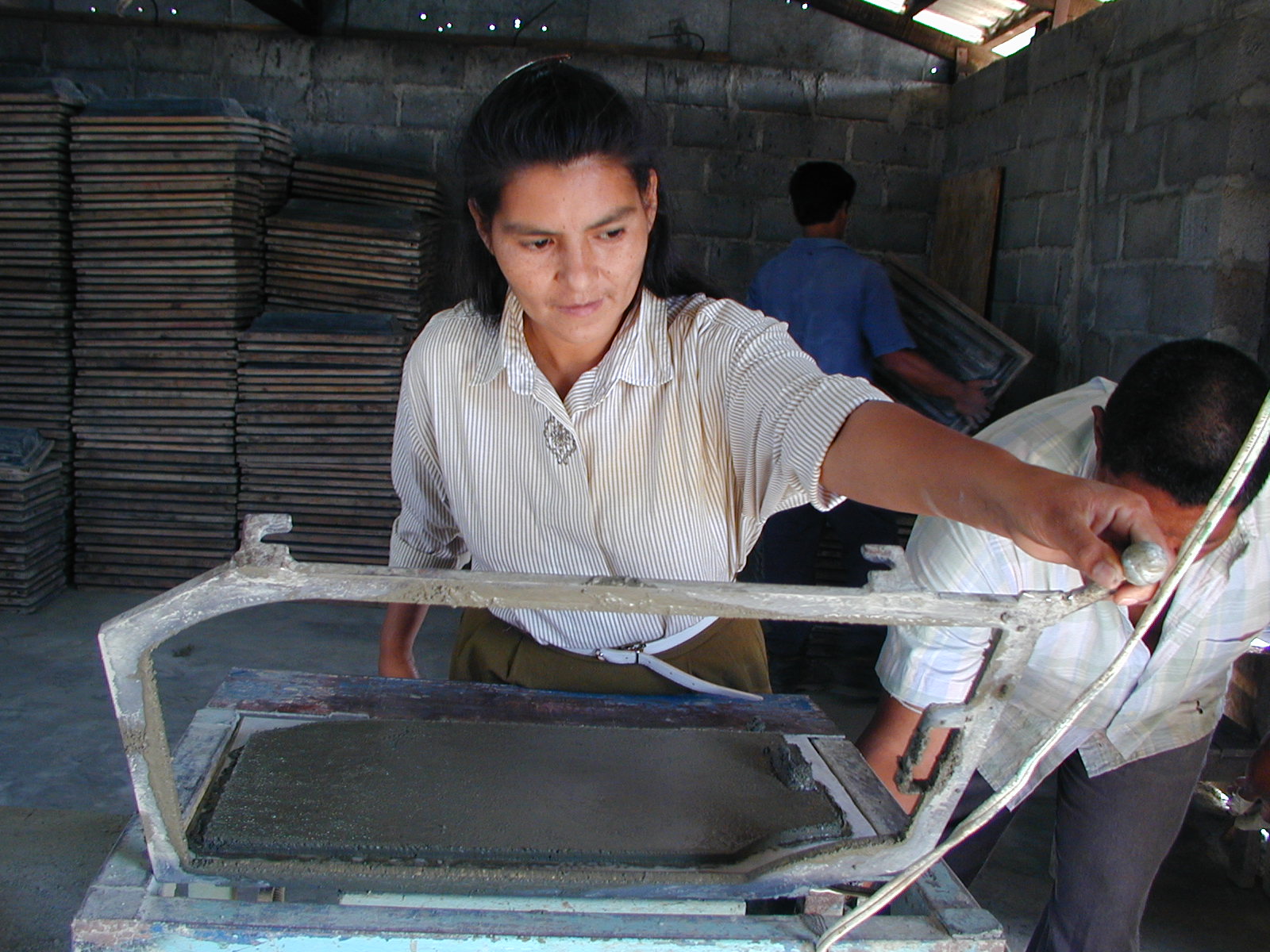
MCR tiles are manufactured using a carefully proportioned mixture of Portland cement, sand and water. The mixture is placed on a vibrating table, spread into a metal frame and shaped using a mould.
The vibration process helps compact the material and achieve consistent thickness and quality. After moulding, the tiles undergo curing to develop the strength and durability required for roofing applications.
The technology allows the production of different components, including:
-
Roman roofing tiles.
-
Ridge tiles.
-
Verge tiles.
-
Mini-vault elements for floor systems.
The production process is relatively simple, but quality depends on correct proportions, careful handling, appropriate curing and consistent production practices.
Small workshops, local production and employment
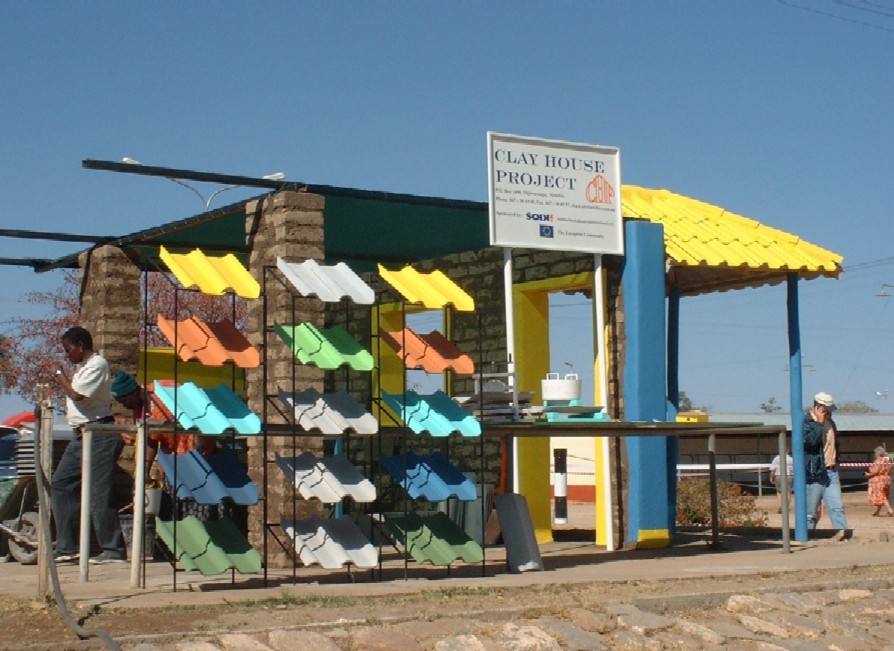
One of the most important contributions of MCR technology is its potential to establish small, locally managed production workshops.
Rather than depending entirely on large industrial manufacturers, communities and entrepreneurs can produce roofing materials close to where they are needed. This approach can reduce transportation requirements, strengthen local economies and create employment opportunities.
EcoSur's historical experience illustrates the scale of this development. The initiative began with 20 pilot production plants in six countries by 1990. By the end of 2002, the network had expanded to approximately 650 workshops in twelve countries, employing more than 3,000 people.
At that time, annual production in Latin America was estimated at approximately three million square metres of roofing tiles, equivalent to around 50,000 roofs per year. Accumulated production had reached approximately 350,000 roofs, benefiting close to two million people.
These figures describe the historical expansion reported by EcoSur and demonstrate the potential of the technology to generate impact beyond the production of building materials.
Training and technology transfer
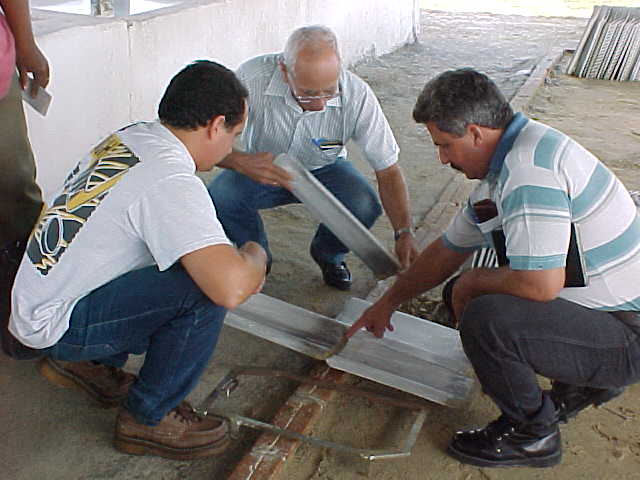
Technology transfer is a central part of the EcoSur approach. The objective is not simply to provide production equipment, but to transfer the knowledge, practical skills and quality-control procedures needed to operate a successful workshop.
EcoSur's international consultants and technical specialists have supported introductory and follow-up courses, workshop installation, equipment operation, production processes and quality assurance.
Training activities have reached different regions, including Latin America, Africa and Asia. The network has reported technology-transfer experiences in countries such as Tajikistan, Vietnam, Bangladesh and Namibia, as well as technical support and networking activities involving producers in Ghana and Cameroon.
An example of this approach can be found in Cali, Colombia, where the Fundación Escuela Para La Vida established an MCR workshop at the Colegio de las Aguas Montebello. Teachers and students received technical training from an EcoSur specialist and began producing their own tiles. These tiles were subsequently used to roof part of the school over a bamboo structure.
This experience demonstrates how the technology can also become a practical educational tool, connecting vocational training, local production and sustainable construction.
Equipment and production capacity
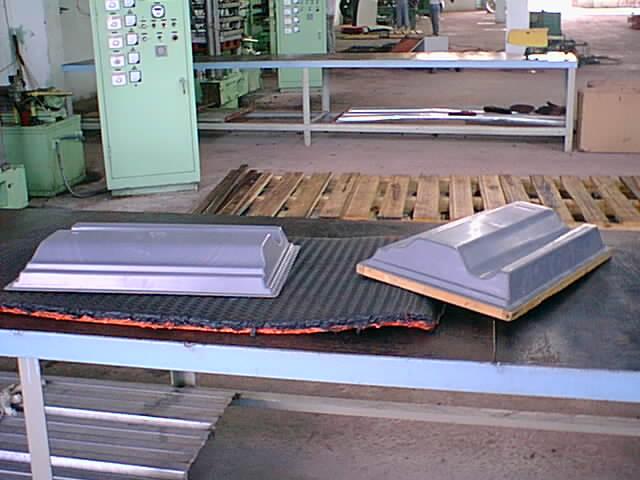
EcoSur has promoted the TEVI MicroConcrete Roofing Tile production unit, designed to make the technology accessible to small workshops.
The equipment includes a vibrating table, plastic moulds, metal frames, measuring tools, basic quality-control equipment and maintenance accessories. It is designed to operate with a 12-volt electrical system and can also work with a car battery or solar panels when appropriately configured.
According to EcoSur's technical information, a well-trained two-person team can produce up to 350 roofing tiles per day, depending on working conditions and production organization.
The equipment package also includes technical manuals and training materials, recognizing that successful production depends on both machinery and practical knowledge.
Quality, durability and performance
The quality of MCR tiles depends on controlled production, appropriate material proportions, moulding, curing and careful installation.
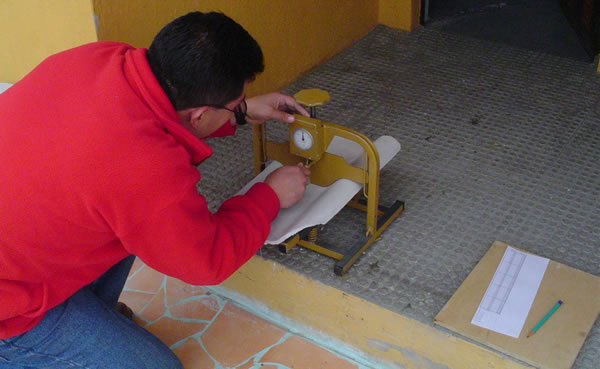
EcoSur reports that its tiles have been tested against several recognized standards for concrete roofing products, including ASTM, British Standards, South African and former Soviet standards. The reported tests addressed general performance requirements such as impermeability and bending strength.
The network has also documented MCR roofs that have withstood severe hurricanes and earthquakes. These experiences reinforce the importance of combining appropriate materials with sound construction practices and designs suited to local conditions.
A technology with international reach
From its beginnings in Latin America, MicroConcrete Roofing has become part of a broader international exchange of knowledge and experience.
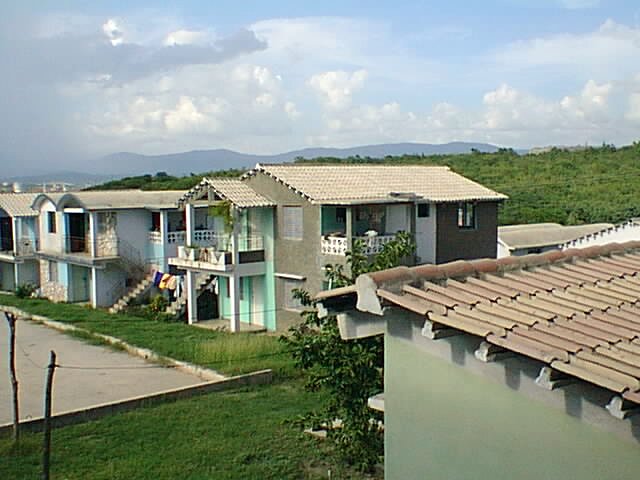
EcoSur has supported the dissemination of the technology through workshops, technical assistance, research, equipment development and collaboration with local organizations, producers and universities.
The experience demonstrates that sustainable construction is not only about developing new materials. It is also about making technical knowledge accessible, strengthening local capacities and creating production systems that respond to the needs of communities.
MicroConcrete: Building local capacity for sustainable housing
MicroConcrete Roofing represents an approach to sustainable construction that combines practical innovation, local entrepreneurship and international cooperation.
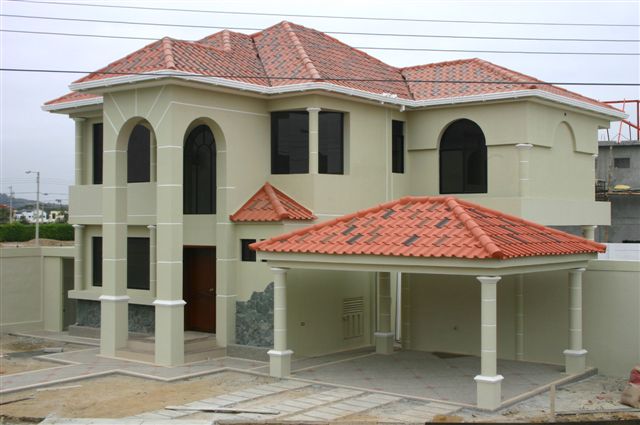
By enabling communities and small businesses to manufacture durable roofing components using locally available materials, MCR contributes to more accessible housing solutions while creating opportunities for skills development and economic activity.
Through technology transfer, training and quality improvement, EcoSur continues to promote the exchange of knowledge and experience needed to make appropriate construction technologies available to more communities.
MicroConcrete is more than a roofing product: it is a production system that connects technology, people and sustainable development.