Local Building Materials: Using Local Resources for Sustainable Construction
Introduction
The use of locally available building materials is an important strategy for promoting affordable and sustainable housing. EcoSur supports the development and application of construction materials that can be produced close to where they are needed, reducing transportation costs, encouraging local production and making better use of natural and industrial resources.
These solutions include clay bricks, lime-based materials, pozzolanic binders and other alternative construction products adapted to local conditions.
Clay Bricks and Earth-Based Materials
Clay is one of the most widely available construction resources. It can be used to produce adobe and other types of earth blocks, provided that the soil is properly selected and prepared.
The quality of adobe depends on the balance between clay and sand, adequate mixing, natural fibers when needed, and proper drying. These materials have been used in housing projects across Latin America, including Guatemala and Peru.
Lime and Pozzolanic Binders
Lime and pozzolanic materials offer alternatives to conventional Portland cement in specific construction applications.
EcoSur has promoted CP-40, a hydraulic binder made by finely grinding hydrated lime and pozzolana. The typical mixture described by EcoSur contains approximately 70% pozzolana and 30% lime.
CP-40 can be used in masonry mortar, plastering, soil stabilization and certain small precast concrete products. Its applications and performance differ from those of Portland cement, so it must be selected according to the intended use.
Local Production and Building Components
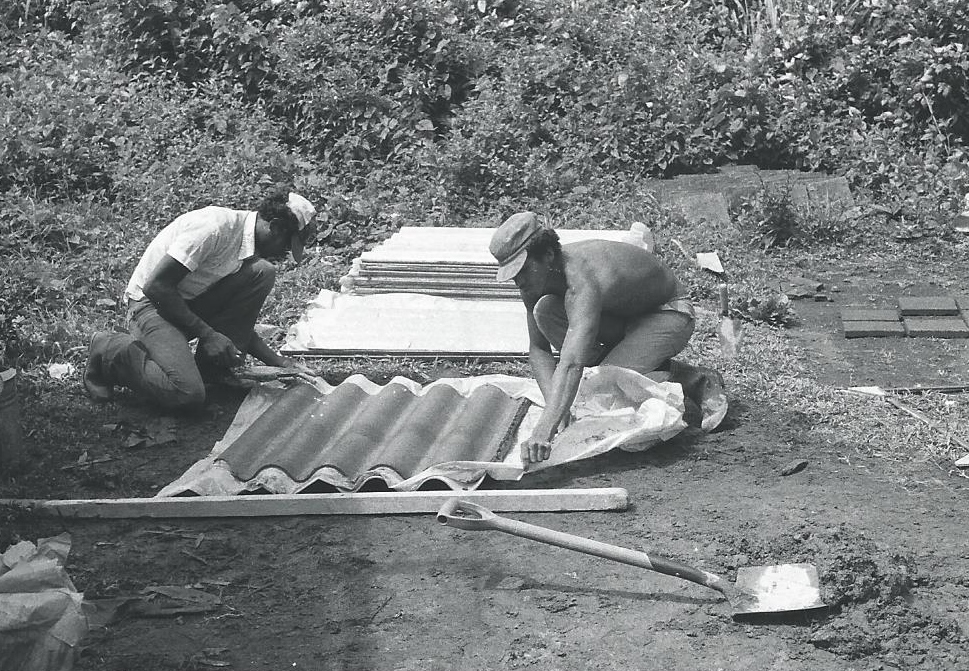
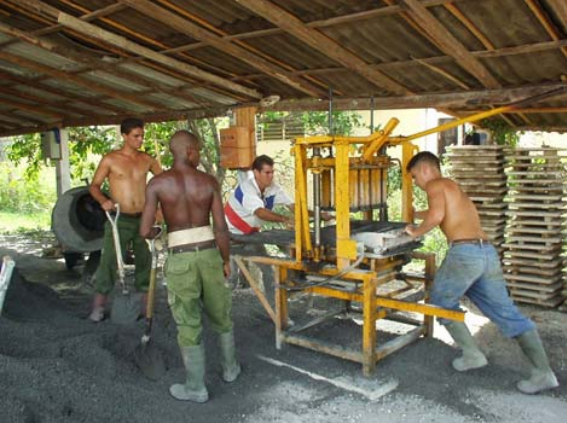
Local workshops can transform nearby raw materials into useful construction products, such as masonry blocks, paving blocks, floor elements and roofing components.
This approach creates opportunities for small-scale production, local employment and the development of technical skills, while reducing dependence on materials transported from distant locations.
Experiences in Different Countries
EcoSur's network has supported initiatives involving local materials and small-scale production in different countries:
-
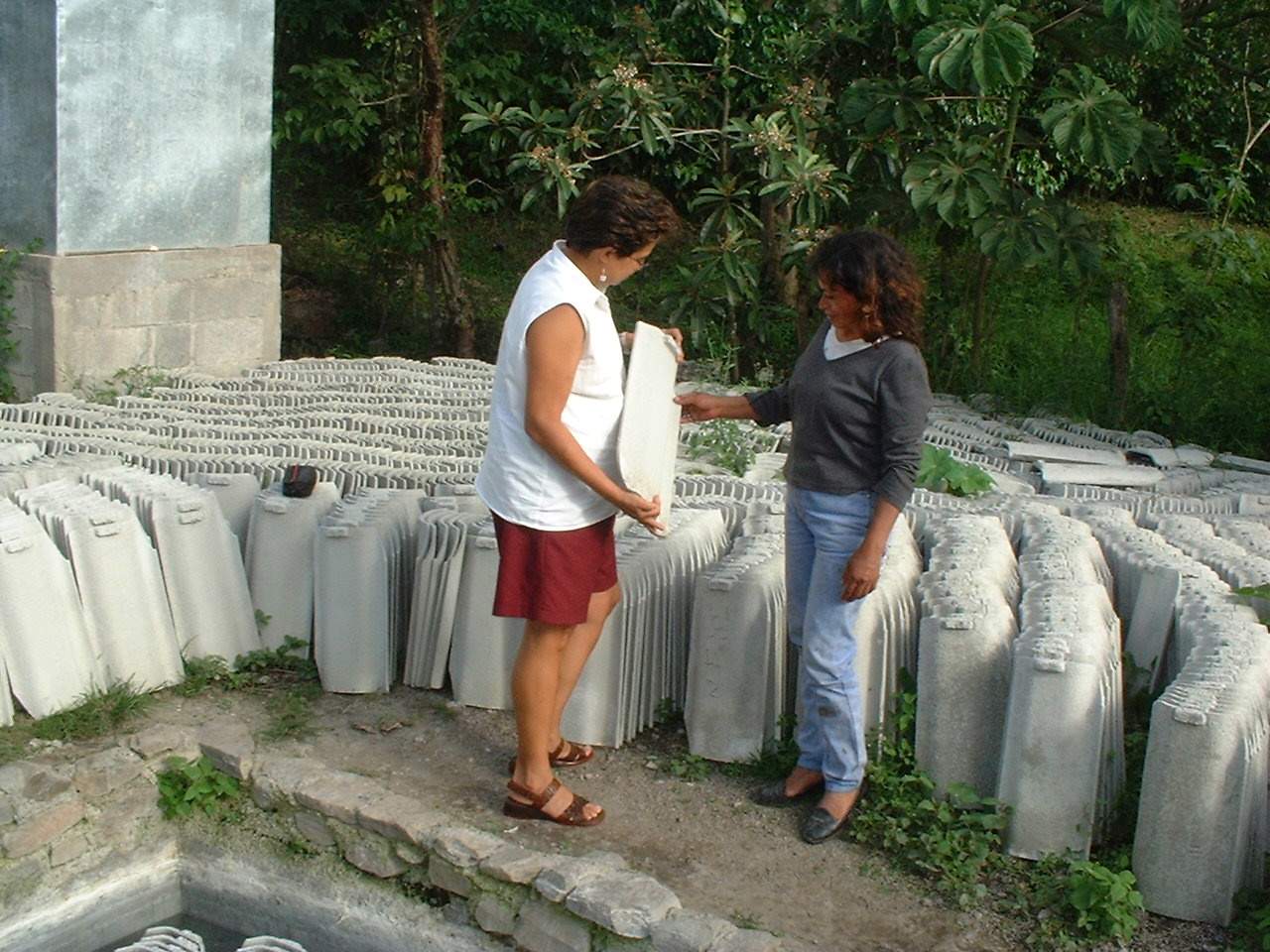
Cuba: In Manicaragua, Villa Clara, more than 100 houses were built using alternative materials produced in a local workshop. Products included wall blocks, concrete floor elements and microconcrete roofing tiles. The initiative involved the CIDEM research center and the Habitat Project.
-
Guatemala: Experiences in rural production of masonry blocks using pozzolanic materials and CP-40 demonstrated the potential of combining local aggregates with alternative binders.
-
Nigeria: A local workshop began producing CP-40 blocks, with technical support and material testing involving the University of Kassel and CIDEM.
August 2003 -
Nicaragua: EcoSur collaborators explored more efficient brick production methods, including the development of a vertical-shaft kiln prototype.
Environmental and Social Benefits
Using local materials can help reduce transportation requirements, make construction more affordable and strengthen local economies. Small production workshops also create opportunities for training, employment and the transfer of appropriate construction technologies.
The selection of each material must consider its availability, technical properties, production process and suitability for local construction requirements.
A More Local and Sustainable Approach to Housing
EcoSur promotes building solutions that connect local resources, technical knowledge and community production. By supporting the development of alternative materials and small-scale workshops, the network contributes to more accessible housing and construction practices adapted to local realities.