
LC3 in Costa Rica: A Cement That Emits 40% Less CO₂
The Planet Needs a New Cement
It is estimated that 8% of global CO₂ emissions come from cement production. Some sources even report that up to 10% of the most important greenhouse gas is emitted during the manufacturing process. Concrete is the most widely used construction material in the world, and its consumption continues to grow exponentially due to global housing and urbanization needs.
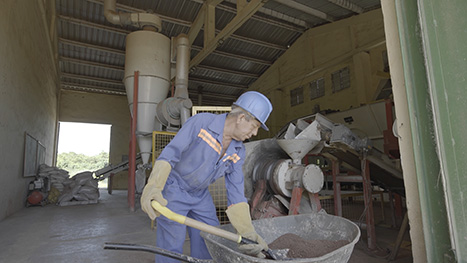
LC3: A Cement That Emits 40% Less CO₂
There is an urgent need to find production methods that drastically reduce emissions from cement manufacturing. More than 30 years ago, Cuban scientist José Fernando Martirena began addressing this challenge. Drawing on experiences in India, he explored the production of cement using ash from sugarcane crop residues and volcanic ash.
With support from the Swiss government and the European Union, real-world trials were conducted in several workshops, including in Nicaragua and Ecuador. The results were promising, but a better raw material was soon identified—one that is abundantly available around the world. This material consists of certain types of clay that can potentially replace clinker, the more polluting component used in cement production.
Shortly afterward, Martirena joined forces with Professor Scrivener of the Swiss Federal Institute of Technology in Lausanne (EPFL), launching a joint research project with support from the Swiss Agency for Development and Cooperation (SDC).
Together, the two universities and a colleague in India developed a new low-carbon cement called LC3, which reduces CO₂ emissions by approximately 40%. Following extensive testing and assessments of quality and durability, efforts began to introduce this new cement to the construction industry. Several companies took the initiative, and more than two million tonnes of LC3 have since been produced in Colombia and Côte d’Ivoire.
Cementos Progreso in Guatemala has also started pilot production.
As a result, nearly one million tonnes of CO₂ are saved annually, equivalent to more than 10% of Costa Rica's emissions. The prospects for the near future are significant. The technology center in Cuba, led by Professor Martirena, advises several companies in the Americas and Africa that are committed to producing LC3 cement, a process that continues to gain momentum.
Currently, more than 100 million people around the world lack decent housing due to the shortage of affordable and durable construction materials. Realistically, concrete is the only construction material capable of meeting this enormous demand. Consequently, cement production continues to increase on a massive scale, along with its contribution to global warming. This vicious cycle can only be mitigated by reducing CO₂ emissions from cement production.
In this context, LC3 emerges as a viable alternative: it can help meet housing needs while reducing people's vulnerability to natural disasters.
Prospects for Central America
The Central University “Marta Abreu” of Las Villas, in Santa Clara, Cuba, operates a pilot plant used to conduct trial production with raw materials from different countries. The objective is to ensure that, in each case, the new cement offers the same mechanical properties as traditional cement, at a lower or comparable cost, and is easy to use.
LC3 has also been shown to have greater resistance to degradation when exposed to salt water, making it an excellent option for construction in coastal environments.
The Federated College of Engineers and Architects of Costa Rica organized an information event on March 28, 2023, featuring Dr. Martirena and the president of the Global Cement Association, among other high-profile guests. The event was sponsored by the Global LC3 Program and the ClimateWorks Foundation. It was primarily aimed at business leaders and scientists from Latin America and the United States.