
Grupo Sofonias: 40 Years of Work
Four Decades Of Commitment To Community Development, Sustainable Construction And Improving Living Conditions In Central America
Grupo Sofonias was formally established in Nicaragua in 1983, when its first bylaws were drafted. However, its origins date back to early 1979 in Guatemala. Two employees of Caritas Guatemala decided to explore a new way of working to support people in need, in a more suitable environment.
At that time, Guatemala was on the brink of civil war. The repressive government used the police, the army and death squads to maintain its system. Working on development projects was viewed unfavorably by those in power, especially when activities involved social and educational work with an awareness-raising component. Among the many people killed every day were also project workers, and the space for freedom became increasingly limited.
The original plan was to establish an education program for refugees in Honduras fleeing the Nicaraguan liberation war, while also seeking opportunities to develop projects in the Dominican Republic.
With the Sandinista victory in Nicaragua, the way was opened for work in the country, particularly in San Juan del Sur, the parish of Father Gaspar García Laviana, who had died in combat during the revolutionary war.
In January 1980, the two families moved to San Juan del Sur to begin community development projects, focusing mainly on the construction of rural schools.
At the same time, an initiative was launched in the Dominican Republic following Hurricane David in September 1979. At the invitation of the parish of San Juan de la Maguana, plans were developed to relocate a village to a safer location, away from flooding.
Sofonias in Nicaragua
In early 1980, Nicaragua declared education a national priority. Teachers arriving in the communities of San Juan del Sur to open schools had to hold classes outdoors or in temporary structures. Grupo Sofonias secured funding and, in cooperation with the Ministry of Education, began organizing school construction committees.
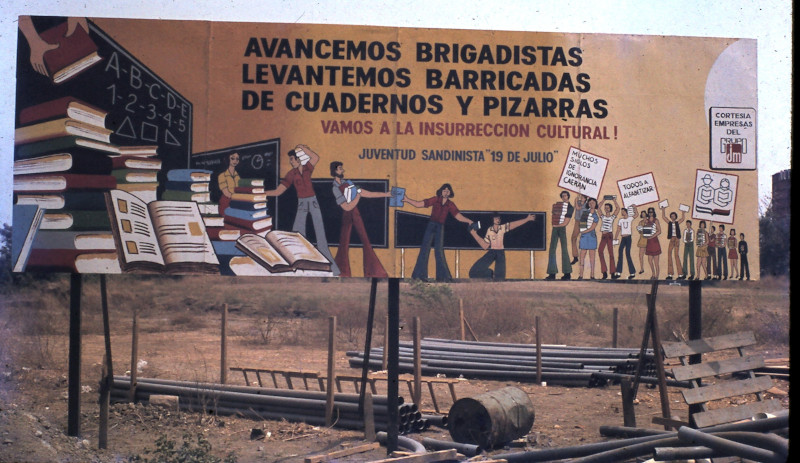
In 1982, the first 26 rural schools were inaugurated in San Juan del Sur during a large public event, celebrating the first municipality in the country to have all its schools built.
The initiative sought to reduce costs by using locally available materials, including stone, bricks and sand. Even children participated in these activities. Local producers of lime, timber, bricks and roof tiles were supported through contracts, loans and technical advice to improve product quality and reduce production costs. Two new brick factories were also established.
The need to produce local building materials extended to roofing systems. In collaboration with organizations abroad, the technology for micro-concrete roofing tiles (MCR) and brick vaults was developed for schools and the first social housing projects.
The success of these projects attracted additional funding. In 1983, Grupo Sofonias was formally organized and signed cooperation agreements with the government. These agreements were renewed twice. In 1999, the government issued Decree 321-26, which allowed the organization to register as a nonprofit entity with the approval of the National Assembly, under the name “Sofonias Nicaragua,” or “SofoNic.” From 1983 to 1991, Emiliano and Catalina Armira led the projects in Nicaragua.
In 1988, the organization's main headquarters moved to Jinotepe, reflecting the wider geographical scope of its activities. During these years, Grupo Sofonias built more than 400 classrooms, hundreds of rural and urban homes, several health centers, community centers and a nursing home, as well as extensions to drinking water networks and various small infrastructure projects.
Numerous women's self-help groups were also organized, focusing on vegetable gardening, income-generating activities and informal education.
During the 1990s, reforestation projects began, combined with alternative agriculture initiatives. Several projects were implemented in coordination with MARENA, Nicaragua's Ministry of Environment and Natural Resources.
Affordable Transportation and Economic Sustainability
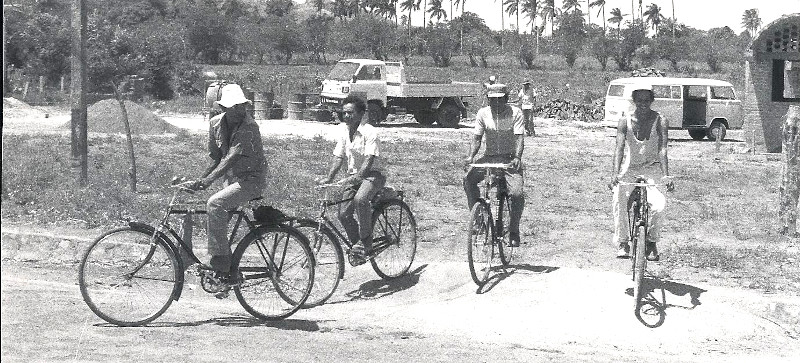
To address transportation needs, the organization began importing bicycle parts in 1982. These were assembled in four workshops in Nicaragua's southern region and sold to the population at affordable prices. To date, more than 150,000 bicycles have reportedly been imported and sold, and workshops continue to operate in Rivas and Jinotepe.
Achieving economic and organizational sustainability requires developing different areas of activity. An organization cannot depend on donations indefinitely; it must also find ways to generate its own income.
In 1991, EcoTec S.A. was founded as a social enterprise to support Sofonias. Its purpose was to undertake commercial activities that benefit the population, including the affordable sale of recycled bicycles, the sale of equipment for producing EcoMaterials, the manufacturing and marketing of construction materials, and the Affordable Housing Program.
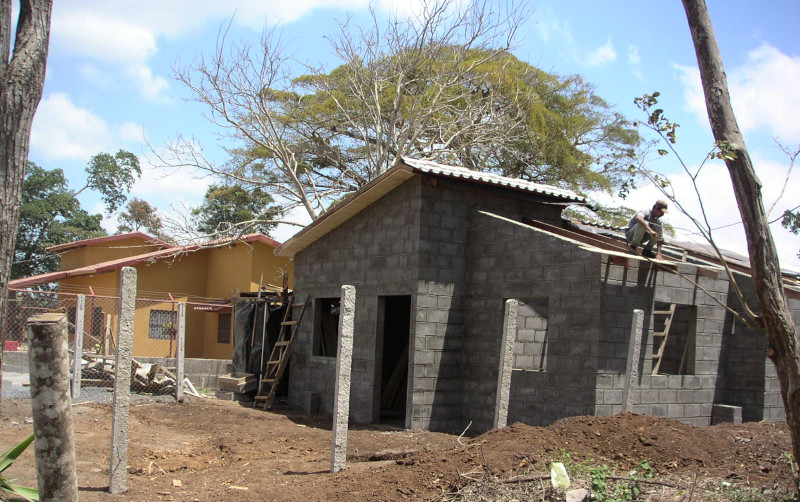
The innovative mortgage scheme developed through the Affordable Housing Program provides an opportunity for working people who are excluded from the banking system to acquire decent housing. The company's shares do not generate dividends or provide any other financial benefits or income. According to its bylaws, all profits must be reinvested in support of social projects.
SofoNic and EcoTec S.A. continue to follow their philosophy of supporting the development of a sustainable system in its three traditional dimensions: ecology, economy and society. Both organizations have boards of directors made up of nationally recognized and experienced professionals in their respective fields. These board members receive no compensation and serve on a voluntary basis.
The Development of EcoMaterials
In 1991, we coined the term “EcoMaterials” to describe technologies that are both environmentally and economically viable.
Our main contributions include the revival of brick vault construction, research and production of micro-concrete roofing tiles, and the use of adobe, bricks, lime-and-stone masonry, ferrocement and lime.
Sofonias uses these products in its own projects whenever they are considered appropriate and also provides technical advice to other institutions.