Collaboration with a University to Promote Earthquake-Resistant Housing
Hands-on Training and Collaboration with UNACH, Ecuador
As part of the existing cooperation agreement between EcoSur Ecuador Foundation and the National University of Chimborazo (UNACH), a training program was conducted for students from the Civil Engineering and Architecture departments within the Faculty of Engineering. The training took place at a small construction project on the university campus, where more than 100 participants gained new knowledge and practical experience.
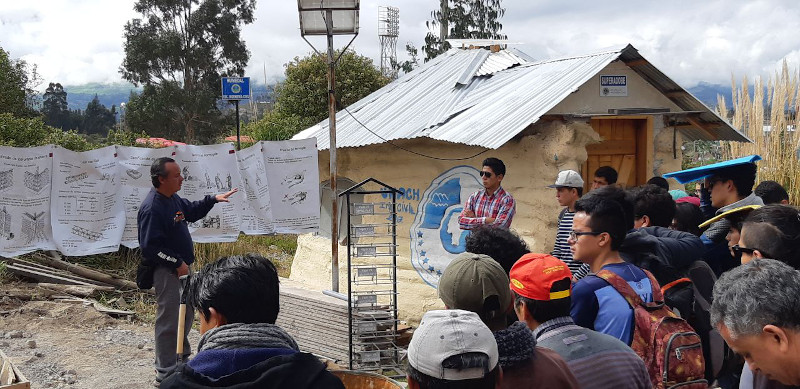
A total of 93 students, 11 skilled masons, 2 civil engineers, and 3 faculty architects from UNACH received two weeks of training in earthquake-resistant construction techniques.
The project involved building a small outdoor pavilion for student events on the UNACH campus. The design was developed by architect David Campos from EcoSur Nicaragua. The construction drawings were prepared by architect Estuardo Quishpillo from Ecuador. Architect Ramón González also contributed to the technical drawings and supervised the physical execution of the project.
The construction was carried out using resources available at UNACH, which provided the building materials. EcoSur contributed the technical expertise of Ramón González and two qualified masons.
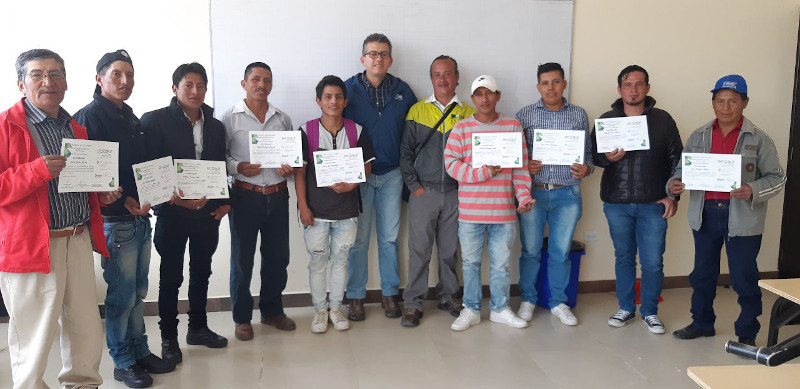
For the participating masons, the experience was particularly valuable. In addition to receiving a formal certificate for the first time, they had the opportunity to learn and apply earthquake-resistant construction techniques.
For Civil Engineering and Architecture students, the experience was equally innovative, as it was their first direct involvement in a construction project. They learned the entire process, from preparing reinforcement spacers to pouring concrete beams.
The training followed EcoSur's proven dual education methodology. Each morning began with a 20-minute introductory session supported by posters and visual materials highlighting the key tasks of the day. At 1:30 p.m., following lunch, the program continued with theoretical training in the classroom.
The training program was highly successful, and the Faculty of Engineering authorities expressed strong interest in continuing this collaboration. New opportunities have emerged for undergraduate internships, thesis projects, and community engagement initiatives involving students from different academic programs.